Every vote counted. Every voter protected. Report suspected fraud →Subscribe

Center for Vulnerable Voters

The vote they can’t defend themselves

The Americans most likely to be silenced at the ballot box are the ones least able to fight back.

Seniors, service members, the disabled, and the homebound. We give vulnerable voters, and the people who care for them, the tools to protect every ballot.

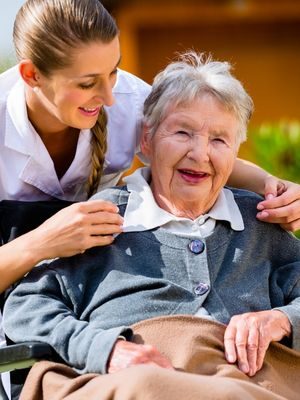
A caregiver helping an elderly woman with paperwork
A ballot cast in a nursing home should be hers, and only hers.

Federal guidance · July 20, 2026

CMS to nursing homes: don’t register residents or mark their ballots without consent.

The Center for Vulnerable Voters has long recommended using bipartisan election teams for residential voting and has warned staff against completing voter-registration or ballot applications—or marking ballots—without the resident voter’s authorization. CVV applauds these changes and stands ready to partner with residential communities, offering complimentary resources and consultation to help ensure alignment with CMS guidelines.

Page one of the CMS Quality & Safety Special Alert Memo QSSAM-26-04-NH, dated July 20, 2026: Protecting the Voting Rights and Autonomy of Vulnerable Residents in Long-Term Care Facilities Read the CMS memo →QSSAM-26-04-NH · PDF, 3 pages
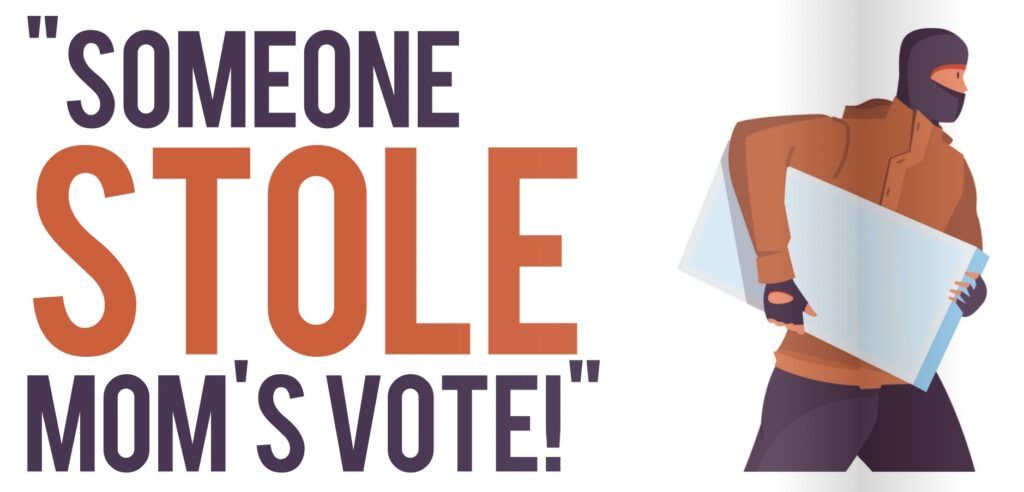
Someone Stole Mom’s Vote

The problem, in one family’s words

Someone stole Mom’s vote.

“I felt like I had been punched in the gut.”

Mary’s mother has non-verbal dementia and can’t name the president, let alone request a ballot. Yet the records showed she’d “voted” in 2020. Stories like hers are not rare, they’re the predictable result of a system that leaves the most vulnerable unguarded.

Read Lori Roman’s full account →
The evidence on the ground · Illinois, November 2022

Three residents. Three ballots. No memory of casting them.

With written permission from both facilities, an occupational therapist interviewed residents who had voted in the 2022 election. She had to abandon her questionnaire almost immediately: the questions were too difficult for nearly everyone, and several residents could not state their own name.

Illinois residential facility case study
Case study · Illinois

Inside two residential facilities on Election Day

The full findings, facility by facility: who was interviewed, what they could and couldn’t recall, and what the ballot records show.

Download the case study →

“Nick”

Thinks he voted. Says someone he didn’t know helped him. He had a hard time working out which person to vote for as President, and could not answer any further questions.

Ballot recordMail ballot requested 13 Oct 2022 · returned 8 Nov 2022

“Tim”

Did not know who he was voting for. He could not hold a conversation long enough to answer anything further.

Ballot recordRecorded as voting in the 2022 general primary

“Rick”

Said he voted, and that he voted for Kennedy. He filled out his ballot in the community room and signed the back. Asked one more question, he walked away.

Ballot recordMail ballot requested 13 Oct 2022 · returned 8 Nov 2022

Residents’ names were changed to protect their privacy. Two ballots were requested on the same day and returned on the same day.

Wisconsin · Office of the Special Counsel, March 2022

Then a state told the facilities to do it in writing.

Wisconsin law says sworn deputies must supervise voting inside care facilities. In 2020 the state suspended them, and sent every clerk a training document telling facility staff what they could do instead. This is what it said, word for word.

Wisconsin Elections Commission “Absentee Voting at Nursing Homes and Care Facilities” Distributed to all clerks of the state, September 25, 2020

As a care facility administrator or staff member, you are able to:

  1. Assist residents in filling out their ballots or certificate envelopes.
  2. Assist residents in completing voter registration forms and absentee requests.
  3. Sign the special certificate envelope (EL-122sp) if necessary.
  4. Witness ballots.

Reproduced in the Second Interim Report, p. 86. Under Wis. Stat. § 6.875, the only people who may help a resident mark a ballot inside a facility are those sworn deputies and the resident’s own immediate family.

What the auditors found

Facilities audited by the Office of the Special Counsel, November 2020 general election
CountyFacilitiesRegisteredVotedRate
Milwaukee301,0841,084100%
Dane24723723100%
Brown1628026595%
Racine12348348100%
Kenosha986684197%

Ninety-one facilities in five counties. The report is explicit that this covers only the facilities its investigators were able to audit, not the whole state, and that the figures could move as more are checked.

It is appalling to me that an appointed, unelected group of volunteers, has enough authority to change how some of our most vulnerable citizens access voting. Residents who did not request ballots voted because someone else made a request for a ballot on their behalf and then voted on their behalf. If even one person’s right to freely choose to vote or not to vote was diminished, then a travesty of justice has occurred.
Patricia Hanson, Racine County District Attorney, in a letter to the county sheriff, quoted in the report at p. 91. Hanson declined to prosecute, citing a lack of jurisdiction, and no charges were filed.

The news conference · October 28, 2021

“Election statute was in fact not just broken, but shattered by members of the Wisconsin Elections Commission.”

Racine County Sheriff Christopher Schmaling, announcing what his investigators found inside a Racine County care facility. His office went on to recommend charges against five members of the commission.

Video: FOX6 News Milwaukee. The Elections Commission rejected the allegations, saying its guidance kept care-facility residents from being disenfranchised.

The scale of the exposure

1.2M
Americans living in nursing homes
988,800
More in assisted-living and residential care communities
46,900
Nursing homes and residential care communities nationwide
2.2M+
Total residents across these long-term care settings

Source: CDC National Center for Health Statistics, National Post-acute and Long-term Care Study, 2022.

Who’s at risk

Five groups. One shared vulnerability.

Each faces a different obstacle between them and a ballot that counts. Start with the group you want to protect.

Stay with it

You can help protect our most vulnerable voters.

Case findings, state guidance and the residential-voting fights as they happen. We send when there is something worth sending.